In an industrial corner of Tottenham Hale, cabinet makers once built aircraft that helped change the course of the Second World War. The Harris Lebus furniture factory on Ferry Lane, already Europe's largest furniture works under one roof, transformed its production lines to manufacture gliders, bombers, and deception equipment that played crucial roles from D-Day to the final push into Germany.
From Cabinet Making to Aircraft Production
Harris Lebus was founded in 1840 by Louis Lebus, a German immigrant who started in Hull before moving the business to London's East End in 1857. The firm established its Tottenham Hale factory in 1900, constructing the vast Finsbury Works on Ferry Lane alongside the River Lea. By 1950, the site sprawled across 43 acres, with 28 acres of factory space under a single roof; over one million square feet of production floor, a west corridor one-third of a mile long, and 12 acres of glass in the roof. The Cabinet Maker journal reported in July 1950 that "for a furniture factory under one roof, Harris Lebus's Finsbury Works are unmatched for size."
When war broke out in 1939, the factory's expertise in precision woodworking became strategically vital. Cabinet makers were classified as being in "reserved occupation" because their skills with wood were exactly what the war effort needed. While other industries converted to metal and munitions, Harris Lebus turned its attention to aircraft.
The Horsa Glider: Tottenham's Wooden Wings
The factory's most significant contribution was the Airspeed Horsa glider, the primary troop-carrying aircraft used by British forces during the war. Between 1940 and 1945, Harris Lebus produced 2,732 Horsa gliders; the majority of the total 3,655 to 3,799 built across all British manufacturers.
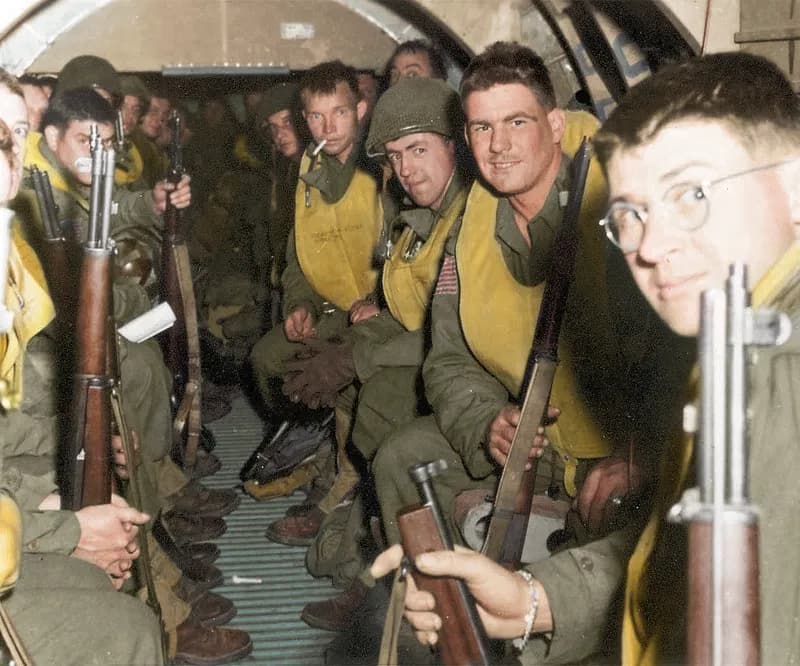
The Horsa was constructed almost entirely from wood, spruce and birch plywood, earning it the nickname "the most wooden aircraft ever built." Weighing little enough that four men could carry the fuselage section, these gliders were towed by aircraft and released over landing zones. On D-Day, Horsa gliders carried troops of the 6th Airborne Division to Normandy. They were used again during Operation Market Garden at Arnhem and in the crossing of the Rhine.
Marlene McAndrew, whose father worked at the factory, recalled him describing the surreal sight: "He told us how astonished he was... he saw four men walking by, carrying an aeroplane on their shoulders. It was, of course, a Horsa glider made mainly of balsa wood."
The Mosquito and Other Wartime Production
Alongside the Horsa, Harris Lebus manufactured components for the de Havilland Mosquito, the legendary "Wooden Wonder" that served as a fighter, bomber, and reconnaissance aircraft. The Mosquito's lightweight wooden construction; designed to conserve aluminium; made it one of the fastest aircraft of the war, and Harris Lebus's cabinet makers were among the few workers in Britain with the precision skills to produce its components.
The factory also built Armstrong Whitworth Albemarle bombers and Hotspur training gliders for the RAF. Less visibly but equally importantly, workers at Ferry Lane produced landing craft that were launched directly onto the River Lea, with the towpath guarded day and night for secrecy. In a remarkable deception operation, the factory also constructed wooden replica Sherman tanks designed to mislead German intelligence about Allied strength and positions.
Precision Under Pressure
The work demanded extraordinary accuracy. Accounts from former workers describe the exacting standards; if a tiny bubble appeared in the adhesive during assembly, the entire component would be smashed and the process repeated. The same craftsmanship that had built Harris Lebus's reputation for fine furniture was now applied to war machines where precision could mean the difference between success and failure.
Despite the conversion to war production, the factory was one of few manufacturers permitted to continue limited domestic furniture production during the conflict, helping to maintain some normality for the home market while contributing to the war effort.
Post-War and the End of an Era
After the war, Harris Lebus played a central role in the Utility furniture scheme, producing the CC41-marked furniture that furnished Britain's post-war homes. The firm pioneered new techniques, including radio frequency glue-curing and high-frequency heating in furniture production, and invented methods for facing man-made boards with other woods.
The company floated as a public company in 1947, with Sir Herman Lebus as Chairman. At his 50th anniversary dinner that year, 330 employees were present who had each served 25 years or more; one had worked there for 54 years. The firm's welfare provisions were extensive, including a fully equipped surgery with doctors and nurses, a fire brigade with 15 full-time firefighters, and the "Pando" social club, named after the Polishing and Office departments, which ran football, cricket, tennis, swimming, drama, and gardening sections.
The factory's end came gradually. In 1957, a new upholstery factory opened at Woodley near Reading. Then in 1967, the 43-acre Tottenham site was sold to the Greater London Council for £3.6 million. The factory closed in 1969, bringing to an end nearly seven decades of production in Tottenham Hale. The site was later redeveloped, and little visible trace remains of what was once Europe's largest furniture factory; and one of Britain's most important wartime aircraft plants.
Local Legacy
For Tottenham, Harris Lebus represents a chapter of industrial history when the area was a centre of manufacturing excellence. The factory employed thousands of local people, served 1.3 million meals annually in its canteen, and pumped 500,000 gallons of water per hour from the River Lea. Its underground air raid shelters, completed in July 1939, were among the first in the country and were opened by Sir John Anderson, who would later give his name to the famous shelter design.
Today, while the factory buildings have gone, the story of Tottenham's furniture makers who built the aircraft that carried Allied troops into battle remains a remarkable testament to British industrial ingenuity and the adaptability of a workforce that turned cabinet-making skills into a contribution to victory.