A 900-Year Witness to Tottenham's History
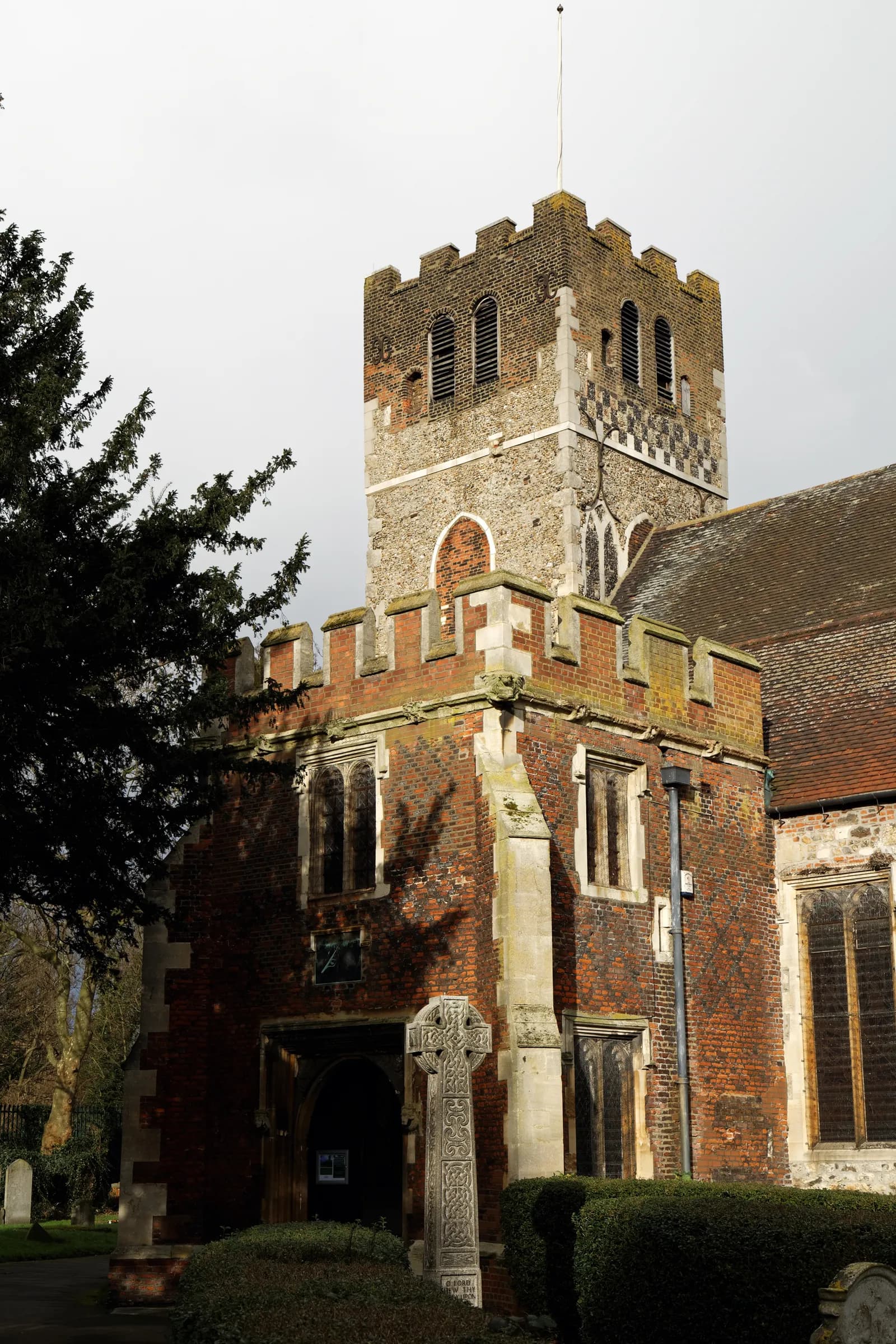
All Hallows Church has stood on Church Road for nearly nine centuries, making it the oldest surviving building in the London Borough of Haringey. Founded around 1150 to 1200 as All Saints' Church, this Grade II* listed building has served as Tottenham's parish church for over 700 years, its tower bells marking the passage of time through wars, plagues, and the growth of a village into a thriving London suburb.
One of those bells carries a particularly remarkable story: it began its life not in England, but in French Canada, and arrived in Tottenham after a journey that spans continents and centuries.
The Quebec Bell: From Cathedral to Battlefield to Tottenham
Among the eight bells housed in the church tower stands a direct link to one of the most significant battles in North American history. The bell was cast in 1663 and originally served as the Garrison Bell for the French Army in Quebec. It hung in Quebec Cathedral, calling the faithful and marking the rhythm of daily life in New France.
Everything changed on 13 September 1759. British forces under General James Wolfe defeated the French under General Louis-Joseph de Montcalm on the Plains of Abraham in the decisive Battle of Quebec. The victory, which claimed the lives of both commanding generals, effectively ended French control of Canada and shifted the balance of power in North America permanently.
In the aftermath, British forces took the bell as a trophy of war and transported it back to England. For decades, it remained in private hands until 1801, when Dr. Humphrey Jackson presented it to All Hallows Church. Archives have since confirmed that this French bell, now over 360 years old, was indeed taken from Quebec Cathedral following the 1759 battle.
The bell's presence in Tottenham creates a tangible connection between this corner of North London and a pivotal moment in the Seven Years' War, a conflict that reshaped the map of the world and set the stage for the American Revolution sixteen years later.
Architecture Through the Ages
While the Quebec bell arrived in the 19th century, the church itself is far older. The oldest surviving parts of the present building are the lower stages of the west tower, which date from the early 14th century. The structure comprises a chancel with north-east vestries, north and south transepts, an aisled nave of six bays, a south porch, and the four-stage west tower that houses the bells.
The church underwent significant restoration between 1875 and 1877 under architect William Butterfield, whose work preserved the building's medieval character while ensuring its continued use. Since 1544, the parish has been in the gift of the Dean and Chapter of St. Paul's Cathedral, maintaining a centuries-long link between Tottenham and one of London's most famous religious institutions.
Royal Connections and Local Legends
Local tradition holds that the church was given to Tottenham by King David I of Scotland, which would strengthen its connection with the Bruce family of Bruce Castle fame. While the exact date of this gift is disputed, the Victoria County History records that in 1134, the king gave the church of Tottenham to Holy Trinity Aldgate, establishing early royal patronage.
The church has attracted notable clergy over the centuries. William Bedwell served as vicar from 1607; he was an Arabic scholar and Bible translator whose linguistic work contributed to the development of English biblical scholarship. Edward Sparke, who held the living from 1667 to 1693, was a well-known devotional writer. Later clergy included John Howard Churchill, who went on to become Dean of Carlisle.
The Churchyard and Its Ancient Residents
The churchyard surrounding All Hallows contains its own historical treasures. Yew trees imported from Ireland more than 1,000 years ago still stand on the grounds, older than the Norman church itself. The earliest monument in the churchyard dates from around 1700, and the parish registers, which begin in 1558, provide an unbroken record of baptisms, marriages, and burials spanning over 460 years.
The churchyard was closed to new burials around 1858, when Tottenham Cemetery opened nearby. Earlier parish records are now held at the London Metropolitan Archives, preserving centuries of local history for researchers and family historians.
Artistic Attention and Wartime Survival
All Hallows has long drawn the attention of artists. The church was painted by several notable figures, including John Constable, William Ellis, and John Preston Neale, testament to its architectural significance and picturesque setting. These artistic records now serve as valuable documentation of how the building and its surroundings have changed over the centuries.
The church survived the Second World War, though not without damage. Its continued presence stands as a reminder of the resilience of Tottenham's built heritage and the community's commitment to preserving its history.
All Hallows Today
In recent years, the church received a £24,000 grant from the UK Government's Culture Recovery Fund for essential repairs, ensuring that the building can continue serving the community. The church remains part of the Diocese of London and is a Resolution Parish under the Bishop of Fulham.
Services continue as they have for centuries: Parish Worship on Sundays at 11am, Mass at 8am on Sundays, and Mass according to the 1662 Book of Common Prayer on Thursdays at 10am. The church maintains close links with St Paul's and All Hallows C of E Nursery, Infant and Junior Schools in Park Lane, continuing its role in local education that stretches back generations.
A Sacred Community in a Changing World
The parish describes itself as a "Sacred Community," welcoming worshippers from across Tottenham. Current clergy include Parish Priest Father Lee Clark, Assistant Priest Father Andrew Bailey, and Assistant Curate Father John Laverick. Parish records from the last 50 years are kept at the church, with older documents available at the London Metropolitan Archives.
All Hallows Church stands as a physical anchor for Tottenham's history, its stones bearing witness to nearly a millennium of change. From its medieval origins to its Victorian restoration, from its royal connections to its bell that rang across the Atlantic, the church continues to serve as a reminder that even in a rapidly changing London suburb, the deep roots of community remain firmly planted.
The Quebec bell still rings out from the tower, its sound carrying across Tottenham just as it once rang across the plains of New France, a testament to the unexpected ways that history connects distant places and peoples.