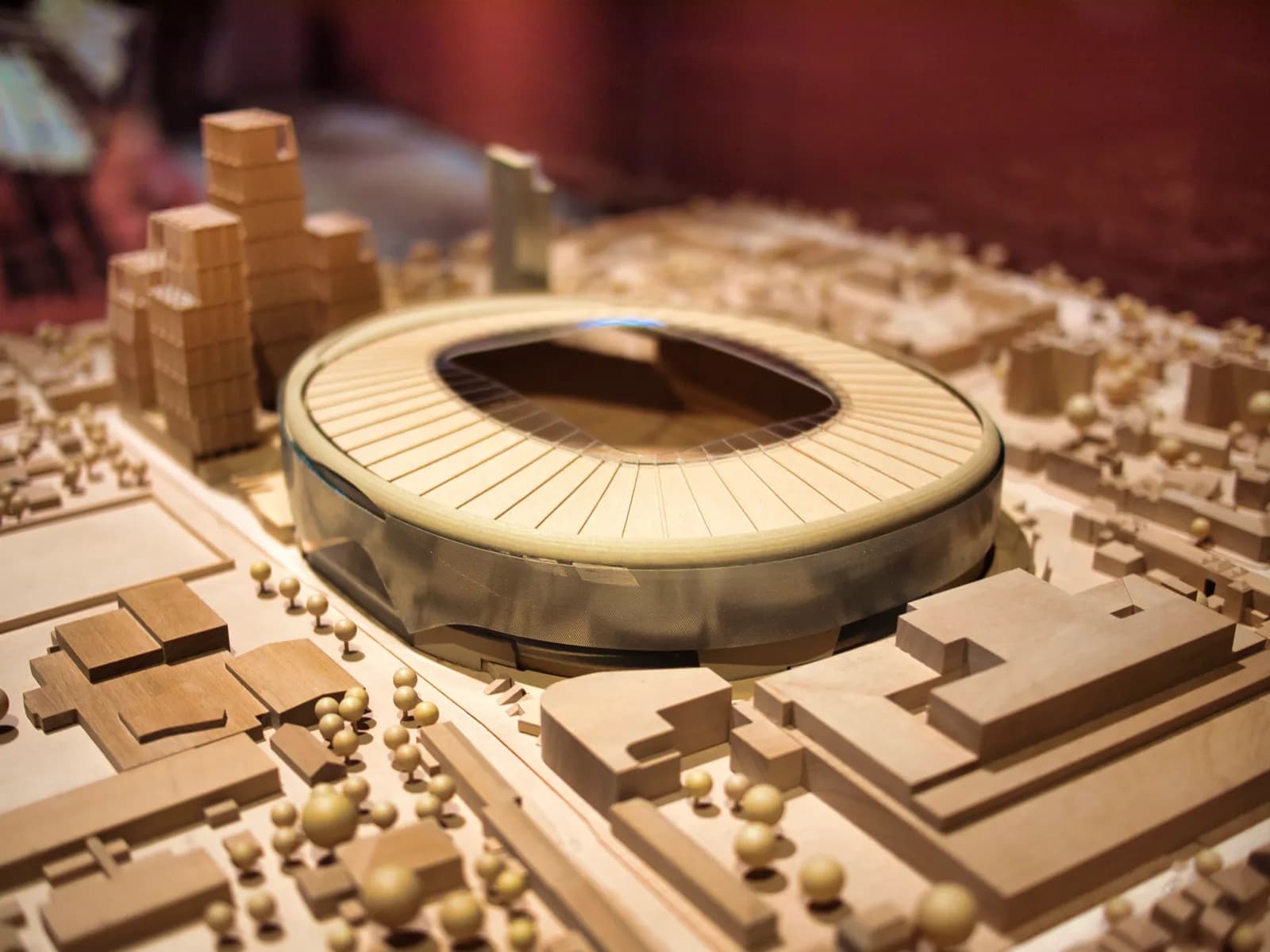
Tottenham is undergoing the most significant transformation in its modern history. The Northumberland Development Project, anchored by the £1 billion Tottenham Hotspur Stadium, sits at the centre of a 20-year regeneration programme that promises to reshape this corner of North London.
The Stadium as Catalyst
The Tottenham Hotspur Stadium opened on 3 April 2019 with a Premier League victory over Crystal Palace. At 62,850 seats, it is the third largest football stadium in England and the largest club ground in London. The venue features the world's first dividing retractable pitch: a grass surface for football with a synthetic pitch underneath for NFL games. The NFL invested £10 million in the stadium as part of a 10-year partnership that brings a minimum of two American football matches to Tottenham each year.
The single-tier South Stand holds 17,500 seats and stands 34.1 metres high with a 34-degree incline, a design inspired by Borussia Dortmund's Signal Iduna Park. The stadium also houses four large LED screens; those on the South Stand are the largest of any stadium in Western Europe.
The Broader Development
The Northumberland Development Project was first announced in 2008, though planning complications and a compulsory purchase order dispute over the Archway Sheet Metal Works delayed progress until the High Court resolved the matter in March 2015. When fully completed, the project will include 585 new homes in four towers ranging from 16 to 32 storeys, a 180-room hotel with 49 serviced apartments, a 274-seat auditorium known as the Tottenham Experience, Lilywhite House (the club's headquarters containing a Sainsbury's supermarket), and a community health centre.
The stadium itself cost an estimated £1 billion, according to club chairman Daniel Levy in April 2019. The project is projected to support 3,500 jobs (1,700 of them new) and inject an estimated £293 million annually into the local economy.
High Road West and Housing
High Road West represents another major regeneration scheme, covering the area between the stadium and White Hart Lane station. The project involves clearing existing homes and businesses, rebuilding the station, creating a walkway for matchday crowds, and delivering new apartments alongside leisure amenities.
High Road West is one of five London sites selected for a partnership between The Crown Estate and Lendlease, backed by a £24 billion government investment programme for affordable housing across the UK. Haringey Council states the scheme will deliver "much-needed high-quality homes including new council homes, new jobs and employment space, improved community facilities such as the Library and Learning Centre, and new and enhanced green and open spaces."
The Local Context
These ambitious plans sit within a ward facing considerable challenges. Northumberland Park, the area encompassing the stadium, had a population of 16,641 in 2018 and ranks among the 2–3 per cent most deprived wards nationally. Unemployment stood at 16.3 per cent in 2018, substantially above both Haringey and London averages. The ward records the lowest median household income in the borough.
The demographic composition reflects Tottenham's diversity: 40.3 per cent of the ward's population identifies as Black (the largest ethnic group), 16.6 per cent as White British (the lowest proportion in Haringey), and 24.2 per cent as Muslim (the highest proportion of all Haringey wards).
Haringey Council has established five resident priorities for Northumberland Park: new homes to meet community needs, increased safety, improved open space, safe movement and routes, and well-used community spaces.
Transport and Connectivity
Transport improvements are fundamental to the regeneration strategy. White Hart Lane and Northumberland Park stations are both being reconstructed with significant service improvements. Tottenham Hale, meanwhile, has benefited from £1 billion of development investment from Haringey Council and the Greater London Authority. The station redevelopment was completed in April 2022, complementing the bus station that opened in December 2014.
Cultural Anchors
Tottenham's regeneration extends beyond bricks and mortar. The Bernie Grant Arts Centre, a £15 million purpose-built multi-arts venue designed by architect David Adjaye, opened in September 2007. Named after the late Bernie Grant MP, it houses a 274-seat auditorium, studio, café/bar, and enterprise centre. The centre's mission reflects Grant's vision of "a unique showcase for international multicultural talent."
Seven Sisters Market, also known as the Latin Village or Pueblito Paisa, represents another cultural anchor. The market opened in 1984 and serves as a key hub for London's Latin American community, with around 40 tenants selling clothing, street food, jewellery, and services. After a compulsory purchase by Grainger plc in 2019 prompted a campaign supported by then-Mayor Boris Johnson and criticised by the UN Office of the High Commissioner for Human Rights, Grainger abandoned the scheme in 2021. The market reopened in September 2025 in a temporary adjacent site while the main building undergoes refurbishment.
The 20-Year Vision
Haringey Council's regeneration programme aims to create 10,000 new homes and 5,000 new jobs by 2025. The plans have proven contentious, given high deprivation levels in Tottenham and strong demand for social housing. Local residents and campaigners have raised concerns about displacement and whether the promised community benefits will materialise.
What is clear is that Tottenham is changing. The stadium, transport upgrades, housing developments, and cultural investments represent the most concentrated period of investment in the area's history. For a community that has historically faced high unemployment and economic disadvantage, the coming years will determine whether this regeneration delivers lasting benefits for existing residents or primarily serves new arrivals.